Fall Dining Table Decor: 9 Ideas That Survive an Actual Dinner
Every fall dining table you have ever saved was photographed on a table nobody was about to eat at. That is not a criticism of the photo — it is the whole job of the photo. But it does mean the picture is missing the one constraint that actually governs your table: it has to come apart tonight, and go back together tomorrow.
The dining table is the only decorated surface in the house that gets completely cleared every single day. A mantel is styled once in September and left alone. A porch is watered occasionally. The table is dismantled at six o’clock, wiped down, and reset — and any arrangement that makes that annoying will be in a cupboard by the second week of October.
So the useful question for fall dining table decor is not what looks autumnal. It is what survives dinner. Everything below is organised around that.
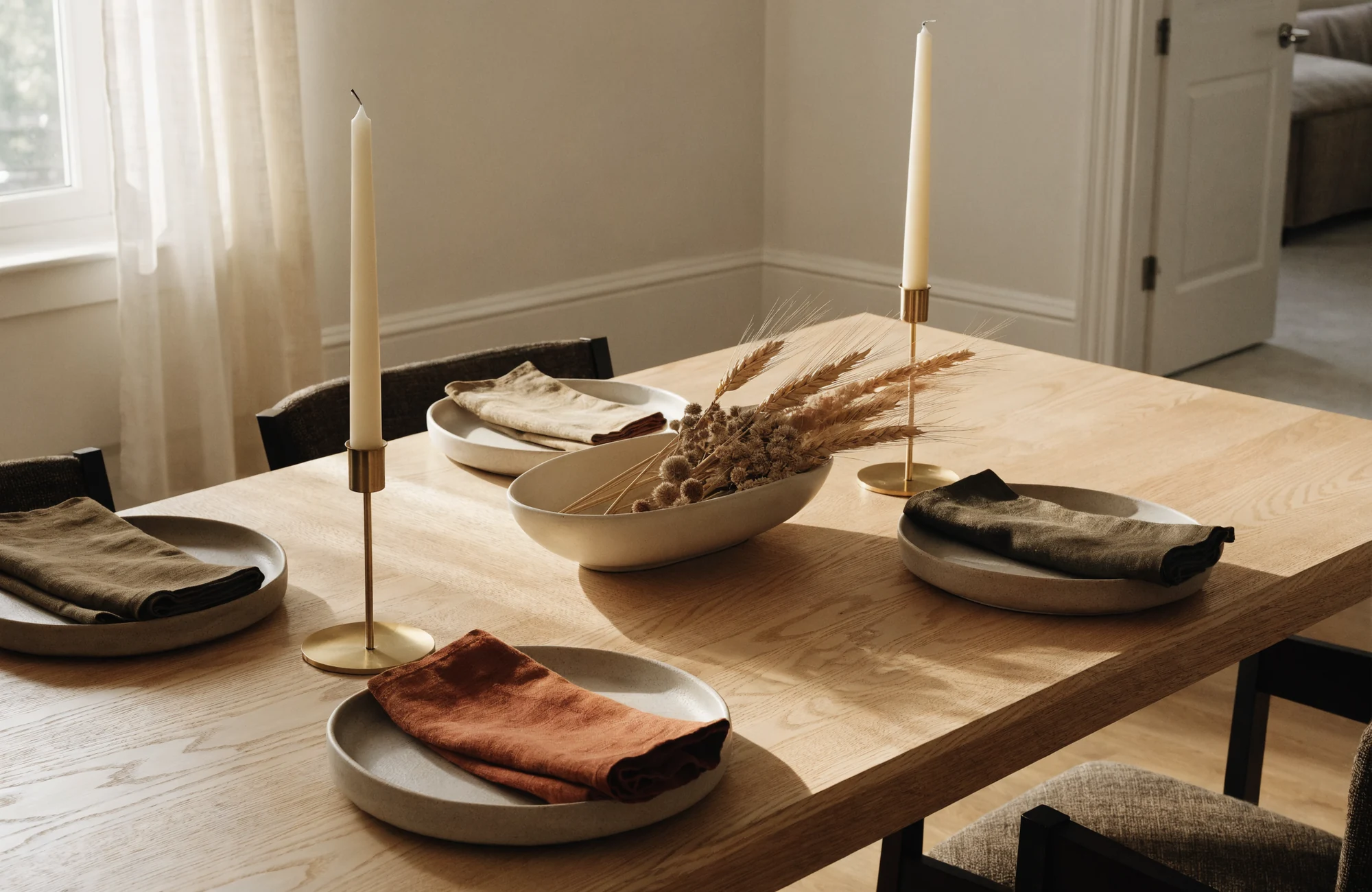
The reset test: can you clear it in one movement?
Here is the whole method, and it takes five seconds to apply. Look at your arrangement and ask: when dinner needs to go down, how many trips does this take?
One trip is a keeper. A low bowl of gourds lifts off in one hand and goes on the sideboard. A runner slides out from under. Two candlesticks travel together.
Three or four trips is a decoration you will quietly stop using. Nine small pumpkins scattered down the centre, a scattering of loose faux leaves, four separate votives and a garland woven between them is a genuinely lovely photograph and a twenty-minute reset. Nobody does that twice.
This is why the fall dining table decor that actually stays up through November tends to look sparser than the versions online. They are not more restrained by temperament. They are more restrained by Tuesday.
The 12-inch rule that decides your centrepiece
There is one hard number in this whole article, and it comes from the fire service rather than from a stylist.
The U.S. Fire Administration’s candle safety guidance is blunt: “Keep candles at least 12 inches away from anything that burns.” It also notes that open flames are dangerous “if they tip over or when they are placed too close to anything that can burn”, and that on average 20 home candle fires are reported each day.
Now look at what a fall tablescape puts next to a flame. Dried wheat. Preserved eucalyptus. Paper leaves. A linen runner. Napkins. Those are all “anything that burns”, and the classic autumn centrepiece arranges them in a continuous line with the candles nestled inside it.
Twelve inches is most of a place setting. That single measurement quietly settles the design:
- Lit candles get their own clear zone, with nothing dried, papery or fabric within a foot of the flame.
- Or the candles stay unlit and become sculpture — tall unlit tapers in brass holders read as autumn perfectly well, and can sit wherever you like.
- Or you use battery candles for the woven-in look, which is the only way to get flame inside an arrangement of dried stems without lying to yourself about it.
Pick one of the three deliberately. The failure mode is drifting into the fourth option by accident: real flames, dried stems, and a vague intention to keep an eye on it.
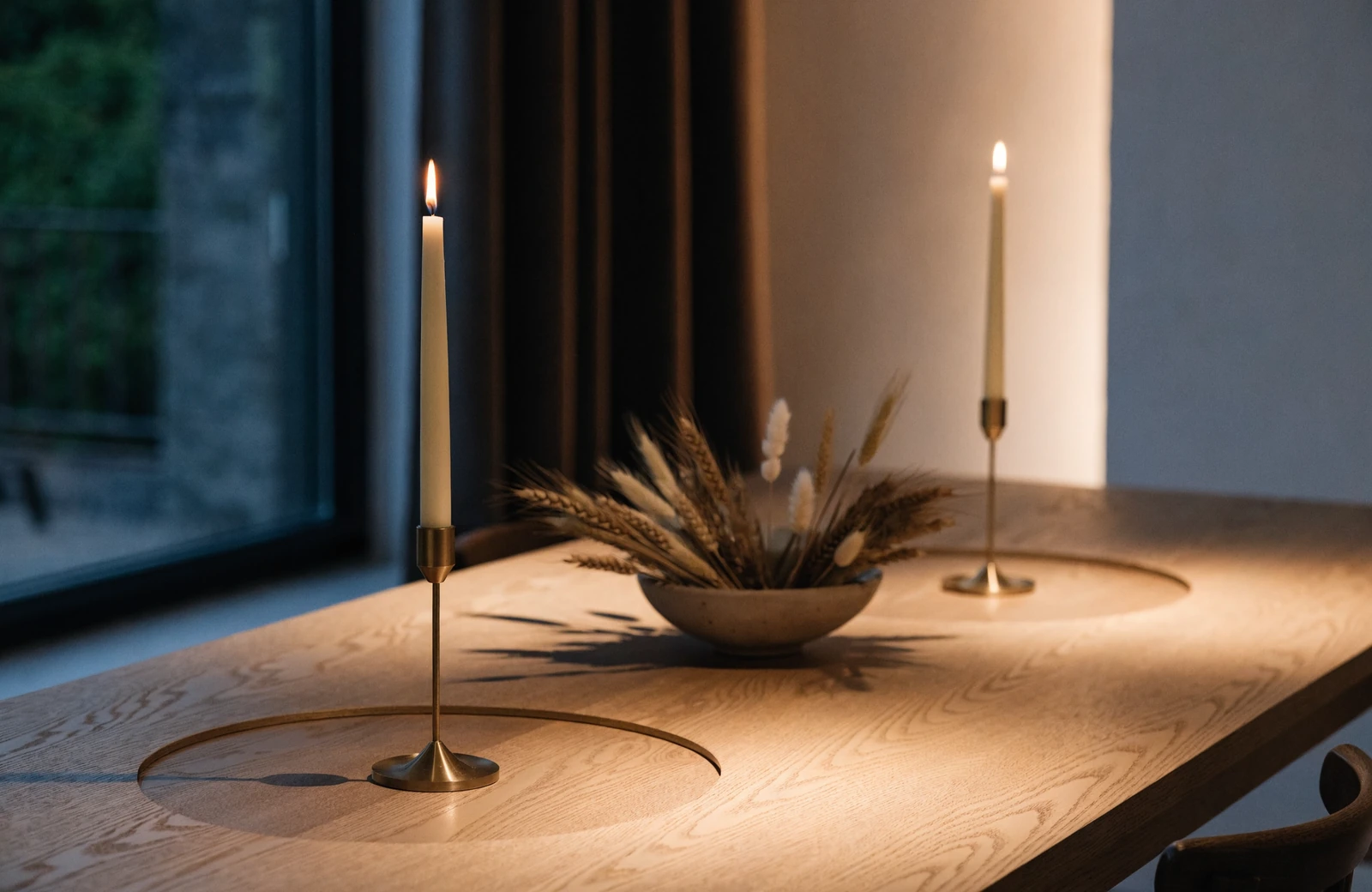
The USFA’s other line is worth repeating because it applies precisely to a dining room: “Blow out candles when you leave a room.” Dinner ends, everyone carries plates to the kitchen, and the table sits lit and empty. That is the moment.
9 fall dining table decor ideas that survive an actual dinner
1. Choose a centrepiece you can lift with one hand
One vessel, not nine objects. A low stoneware bowl of small pumpkins, a shallow tray of pears and oak leaves, a squat jug of dried hydrangea. It has a handle or a rim, it lifts in one movement, and it lands on the sideboard intact.
This single decision does more for a table’s survival than any styling choice.
2. Keep the centre line low enough to see over
The conversational rule is that people should be able to see one another across the table without leaning. In practice that means keeping the middle of the table below about twelve inches — roughly elbow-to-fingertip — or going deliberately tall and narrow so sightlines pass underneath.
Confusingly, this is a different twelve inches from the candle rule above. That one is clearance measured outward from the flame; this one is height measured up from the table.
The awkward zone is the middle: a fifteen-inch arrangement is short enough to look at and tall enough to hide the person opposite.
3. Use one material, repeated
The fastest way to make a table look cluttered rather than seasonal is variety. Three squat orange pumpkins in a row reads as considered. A pumpkin, a gourd, two acorns, a sprig of berries and a faux leaf reads as the contents of a drawer.
Pick one material and repeat it. Repetition is what makes a small amount of decor look intentional.
4. Let the napkins do the colour work
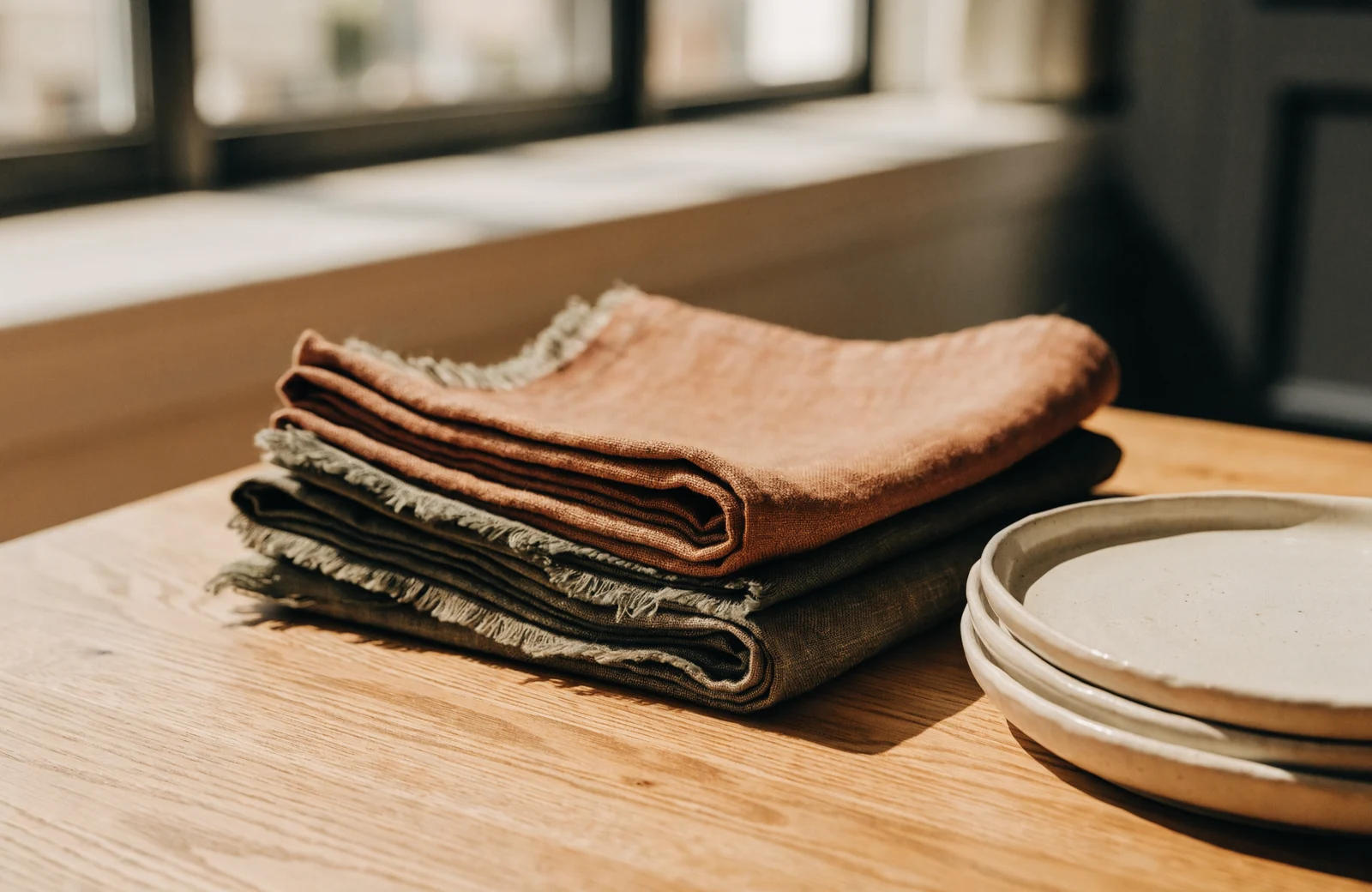
Napkins are the cheapest seasonal lever in the house and the only decor on the table that is supposed to be handled. Rust, ochre, deep olive, oxblood — four napkins will shift the palette of the whole table for the price of one candle, and they go in the wash rather than in a storage box.
If you change one thing this month, change these.
5. Run something down the middle that slides out
A runner does two useful things: it defines the centre of the table so your arrangement has somewhere to belong, and it slides out from under everything when you need the table back. A full tablecloth has to be lifted clear of every object on it.
For a table that gets eaten at daily, a runner beats a cloth on practicality alone.
6. Forage the centrepiece for free
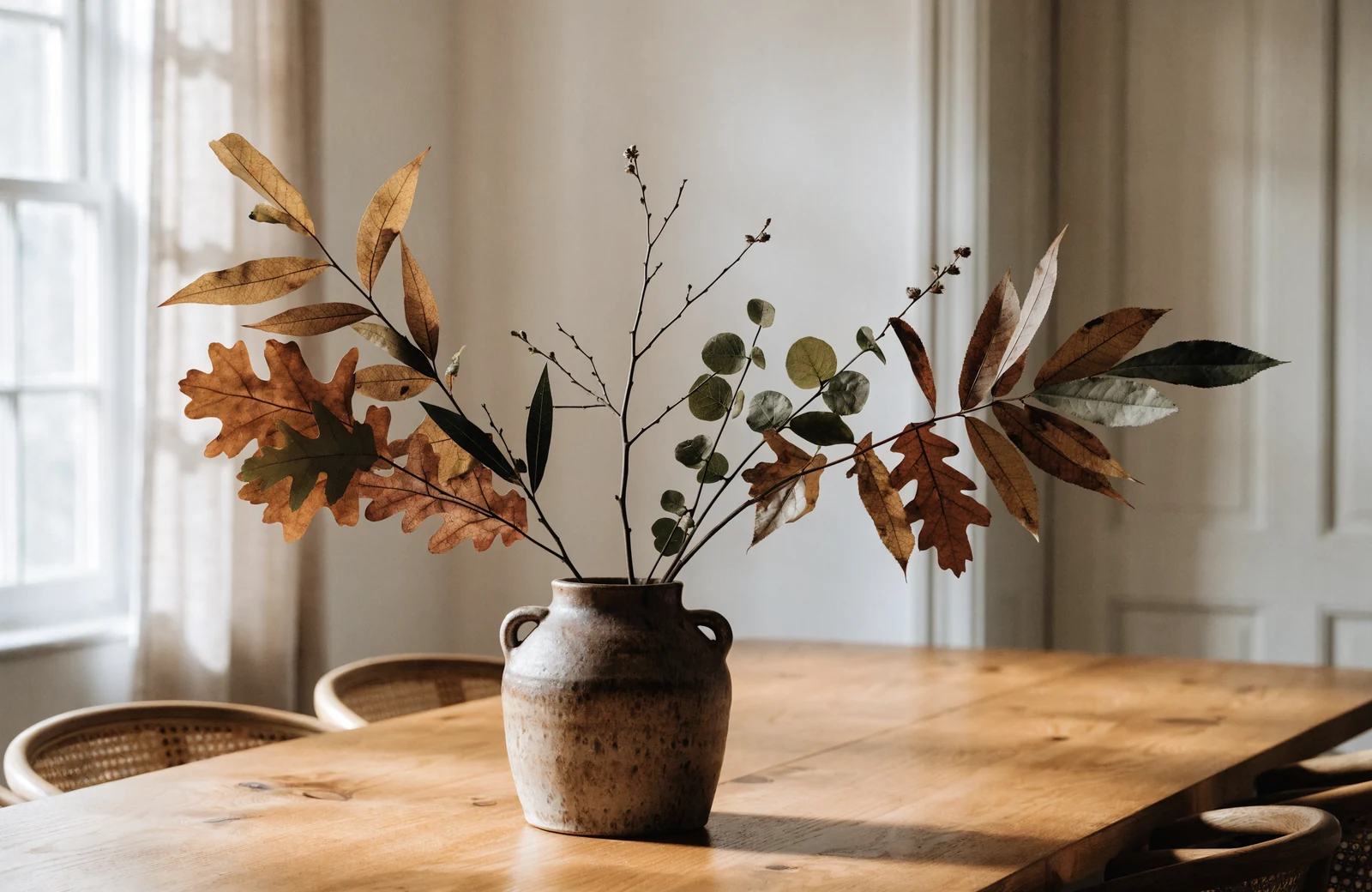
The best fall dining table decor is frequently lying on the pavement. Branches with turning leaves, seed heads, bare twigs with interesting structure. In a heavy low vessel they cost nothing, last a couple of weeks, and look more like the season than anything you can buy — because they literally are the season.
Cut the stems short. Foraged material wants to be arranged as a mass, not as a bouquet.
7. Layer under the plate, not around it
Placemats and chargers add texture and colour without adding a single object to the middle of the table. They also come off with the plates, which means they cost you nothing at reset.
Woven, felted or plain dark ceramic all work. This is the highest-return, lowest-friction layer on the table.
8. Treat unlit candles as sculpture
Tall taper candles in simple holders are one of the strongest autumn signals available, and they are at their most useful unlit. No clearance zone, no supervision, no wax on the runner. Vary the heights, keep the holders matching, and let the vertical line do the work.
If you light them, go back to the twelve inches.
9. Leave a third of the table empty
Every table needs somewhere to put the serving dish. Deliberate empty space is what separates a table that is decorated from a table that is occupied — and it is the difference between moving your centrepiece at dinner and simply setting the food down beside it.
What changes when it is actually a dinner party
A dinner party is the one night the reset test does not apply, because you will happily spend twenty minutes on a table you are about to sit at for three hours.
So this is the night the scattered-votive, woven-garland, individually-placed-pumpkin school of fall dining table decor earns its keep. Do it for the evening, photograph it if you like, and take it apart afterwards rather than trying to live with it.
The twelve-inch rule still applies, and applies harder — more people, more reaching across, more sleeves.
The November swap that buys another six weeks
Almost nobody does this, and it is the cheapest move in the article.
Around the first week of November, take out anything orange and anything obviously Halloween-adjacent, and leave everything else exactly where it is. The dried stems stay. The brass stays. The napkins stay if they are rust or olive rather than pumpkin. Add a couple of white or green squashes if you have them.
The table you built in September becomes a Thanksgiving table with about four minutes of work, and it carries through to December without ever looking like you forgot to change it.
Frequently Asked Questions
How tall should a fall dining table centrepiece be?
Either below about twelve inches so people can see over it, or tall and narrow enough that sightlines pass underneath. The awkward middle — around fifteen inches — is tall enough to block a face and short enough that you look straight at it.
Can I put dried flowers or wheat near candles on a dining table?
Not within twelve inches of a lit flame. The U.S. Fire Administration’s guidance is to keep candles at least 12 inches from anything that burns, and dried botanicals, paper and linen all qualify. Use battery candles if you want flame-look inside the arrangement, or keep real candles in their own clear zone.
What is the cheapest fall dining table decor idea?
Change the napkins. Four in rust, ochre or deep olive shift the palette of the whole table, cost less than a single candle, and go in the wash instead of into storage.
Runner or full tablecloth for a table we eat at every day?
A runner. It slides out from under the arrangement when you need the table back, where a full cloth has to be lifted clear of everything sitting on it.
Start with the reset, not the centrepiece
If the whole thing feels like too many decisions, it collapses into one: build something you can clear in a single movement, and keep flame twelve inches from anything that burns. Everything else on this list is a variation on those two moves.
That is also why fall dining table decor tends to look better sparser. Restraint here is not a style choice — it is what is left after a table has to work.
For the room around it, our cozy fall living room decor guide takes the same approach to the sofa and the lighting, and fall mantel decorating ideas works through the shelf above the fire — including what changes when the fire actually gets lit.
And if the styling is heading outside, fall porch decorating ideas covers the ten-week version of the same problem.